Dec. 17, 2021
DME Hose Nipple & Seal Pros & Cons-©Powered by DME&JDE Group
In this issue, Mr. Niuniu will detail the advantages and disadvantages of DME hose nipples and their corresponding sealing types.
The sealing method of hose nipples and fittings is a critical consideration when selecting hydraulic hose assemblies, as it plays a vital role in ensuring the stable and reliable operation of the entire hydraulic system.
Now, let’s review the sealing types for DME nipples.
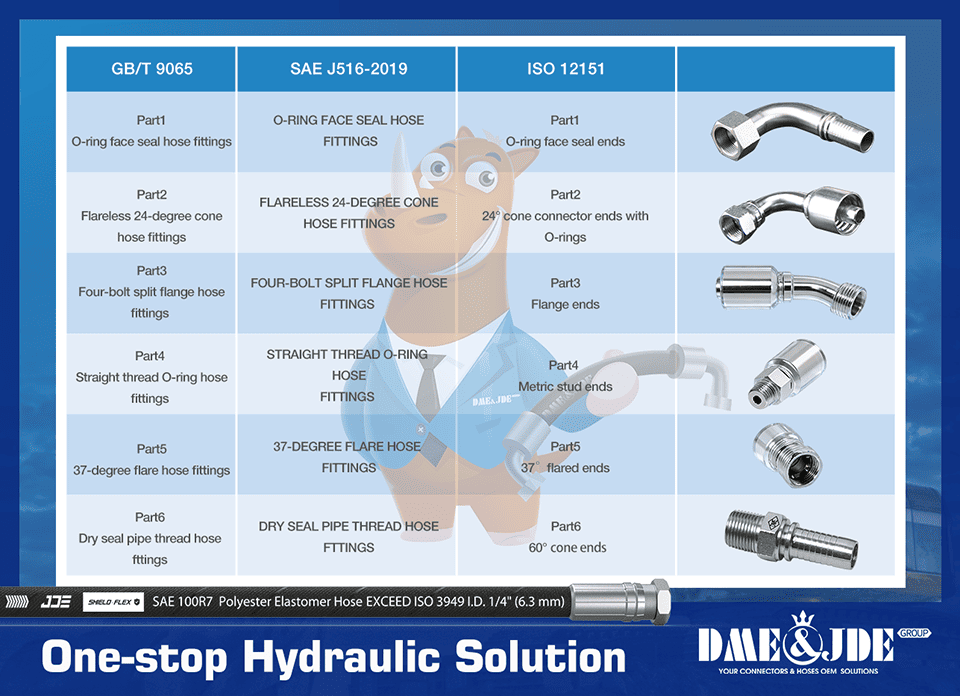
A comparison of the hose fitting standards GB/T 9065, SAE J516-2019 and ISO 12151 reveals that GB/T 9065 and ISO 12151 are largely consistent in their classification and description. When these two standards are compared with SAE J516-2019, the only discrepancy lies in Part 6 of SAE J516-2019, which specifies two distinct types: 60° cone ends and dry-seal pipe thread hose fittings.
Up next, Niuniu walks you through the pros and cons of DME’s six nipple sealing types in detail.
-
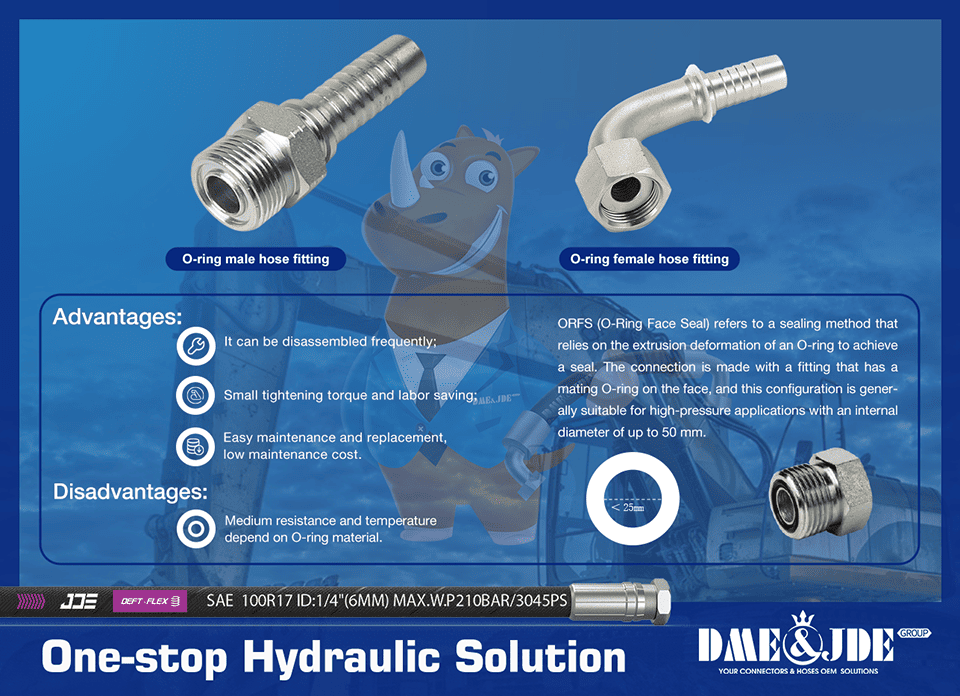
O-ring Face Seal Hose Fittings
-
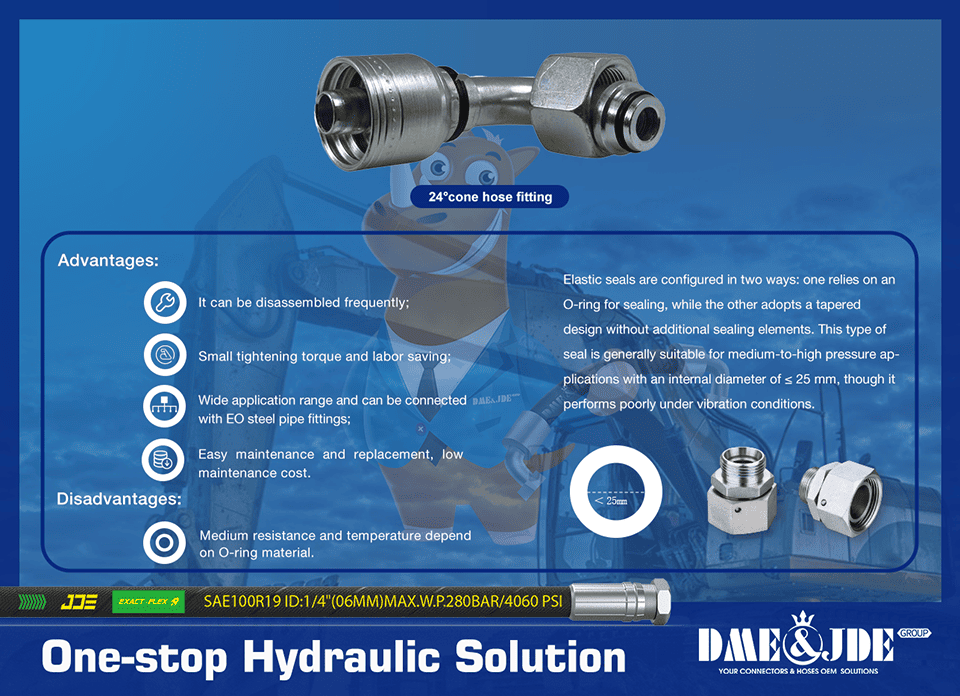
24° Cone Sealed End Hose Fitting
-
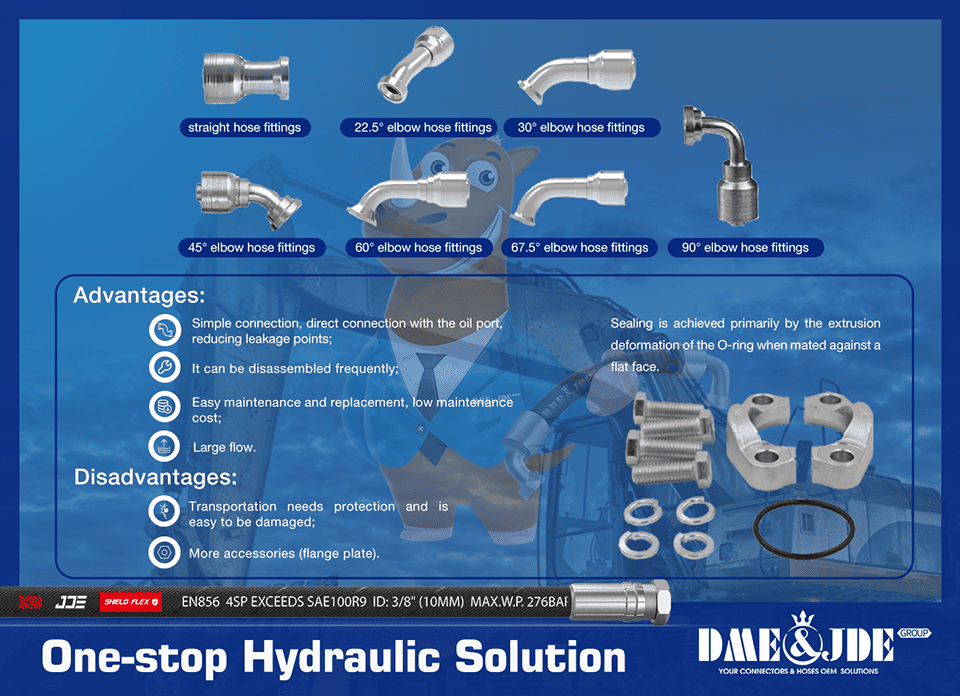
Flange Hose Fittings
-
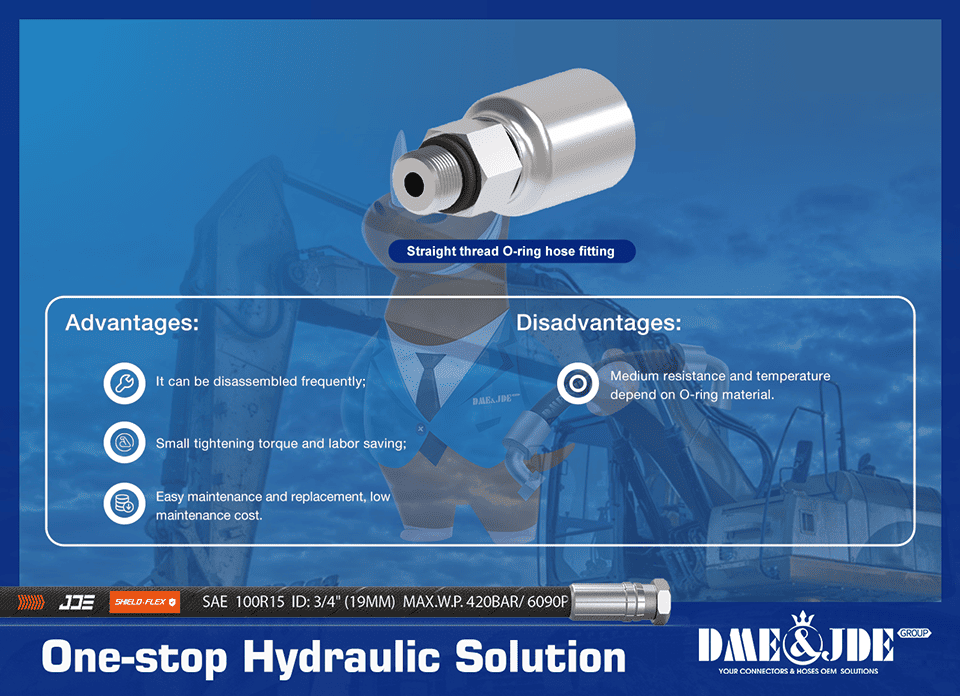
Straight Thread O-ring Hose Fitting
-
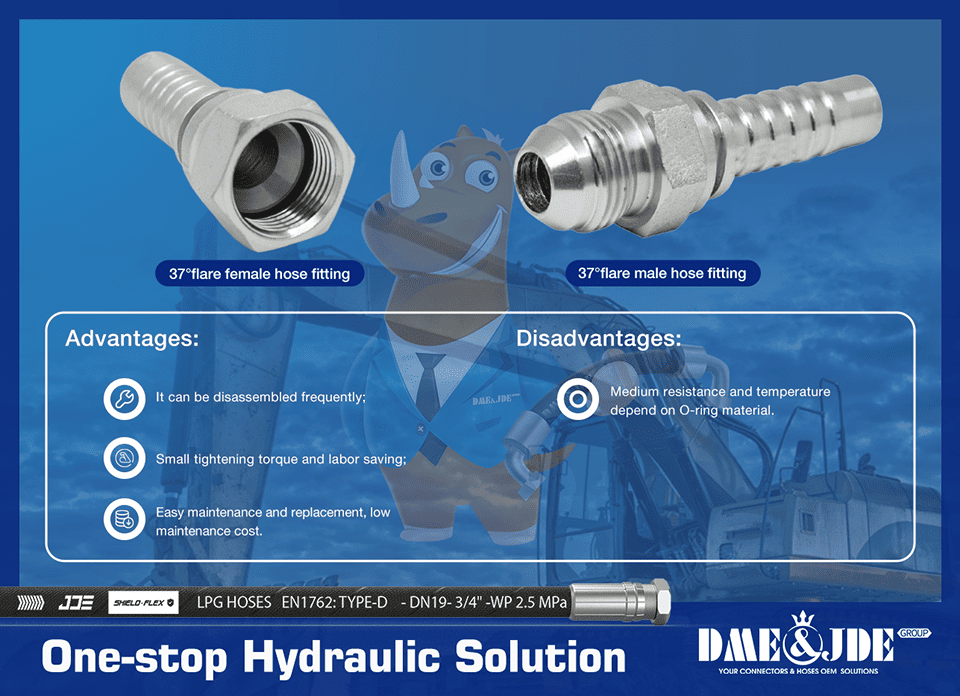
37° Flare Hose Fitting
-
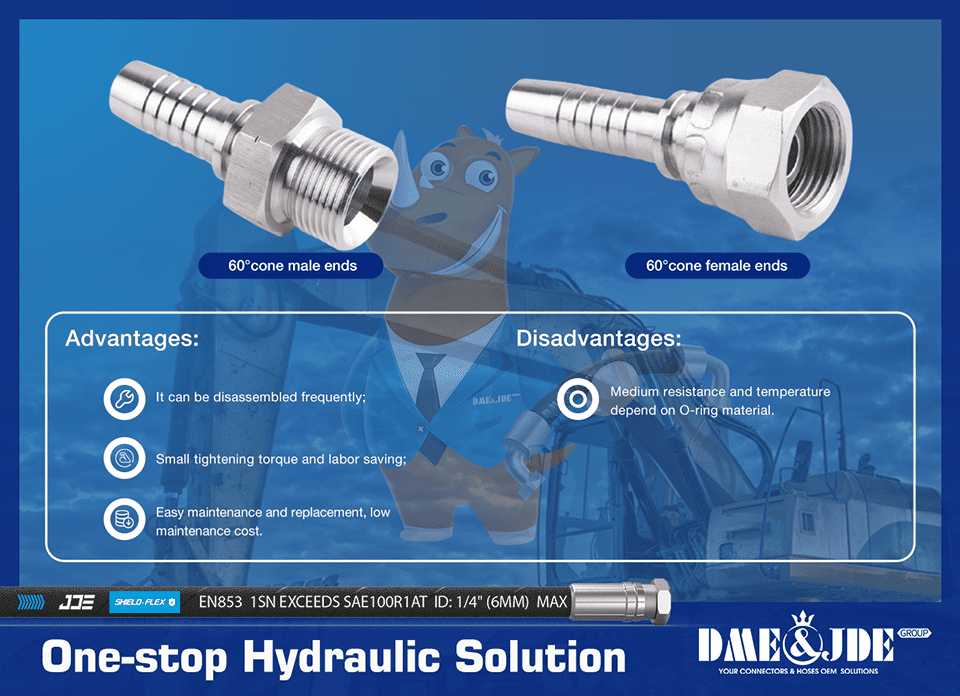
60° Cone Ends
Next, Niuniu will introduce the sealing types of DME fittings—these are classified into rigid seals and elastic seals—and their corresponding pros and cons are listed as follows.
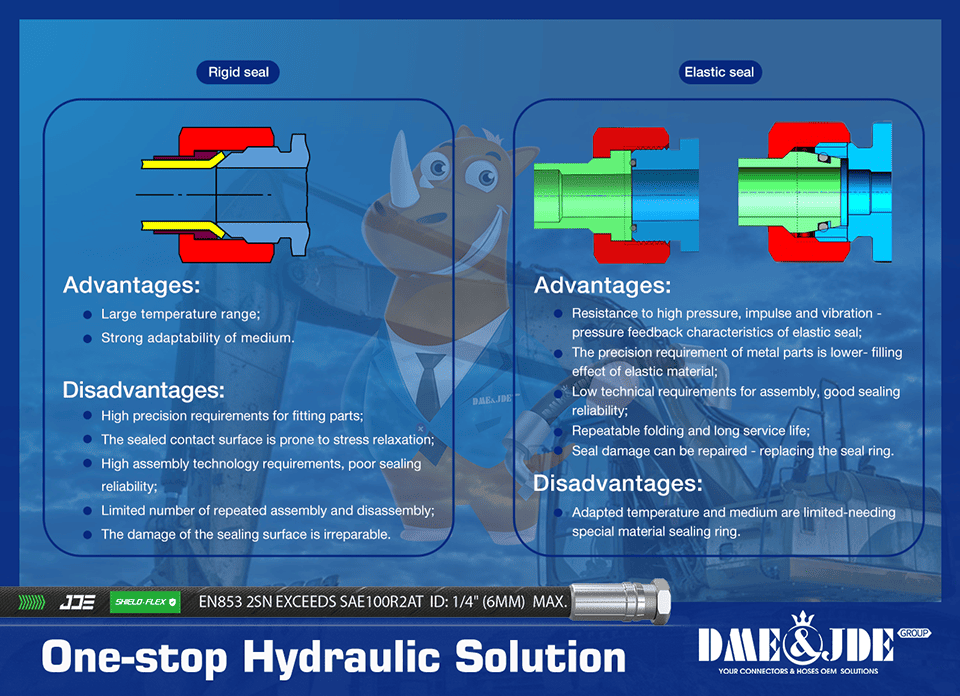
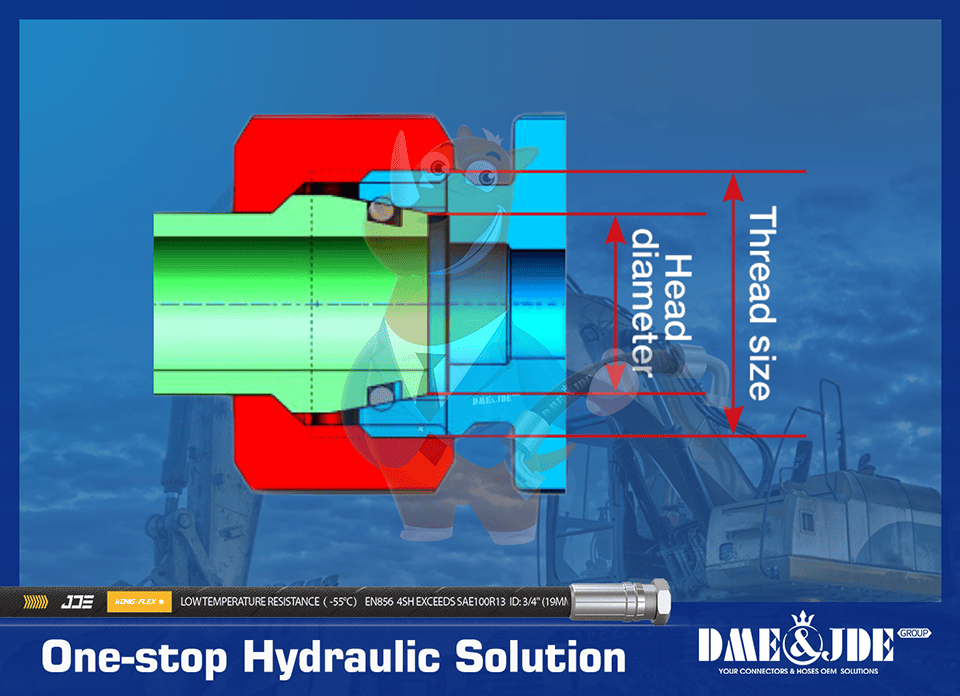
Whether it is a rigid seal or an elastic seal, the thread provides both mechanical and sealing support. It is not only a key component of the fitting, but also a primary criterion for fitting classification.
Lastly, Niuniu will share supplementary fitting knowledge for your reference.
-
Distinguish Weight Fittings
Fittings of the same specification are further categorized by weight based on pressure rating, with the light series suitable for 3000 psi applications and the heavy series for 6000 psi systems.
-
Distinguish 24° Cone Weight Series
♢ Head OD D < 14 mm: Determine via thread measurement
♢ Head OD D > 14 mm: Direct identification
♢ Nipple tail weight: Match to the corresponding hose
-
Distinguish SAE Flange Weight Series
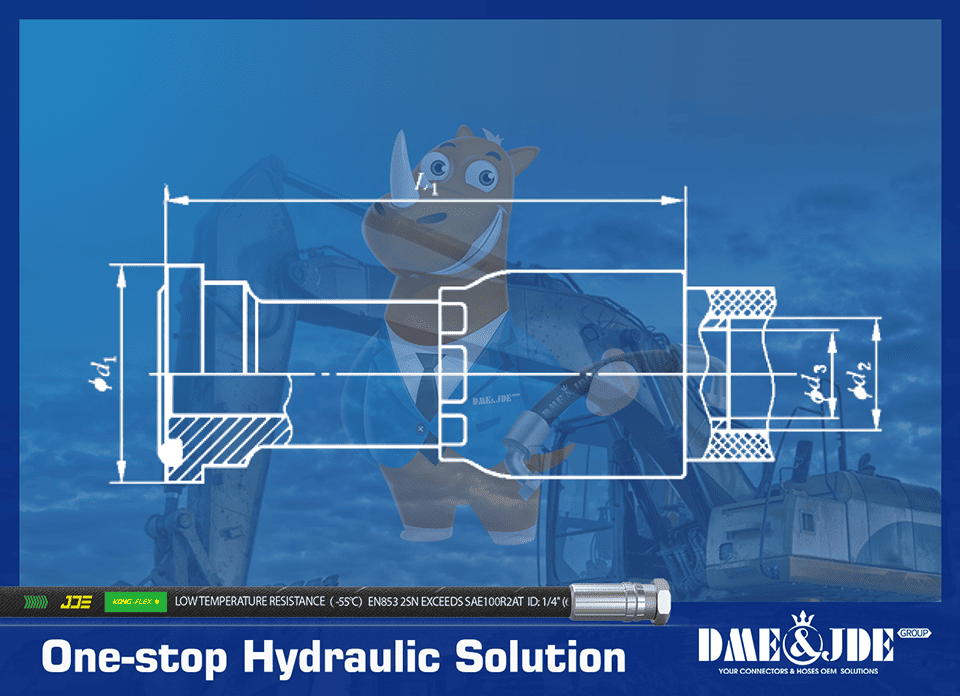
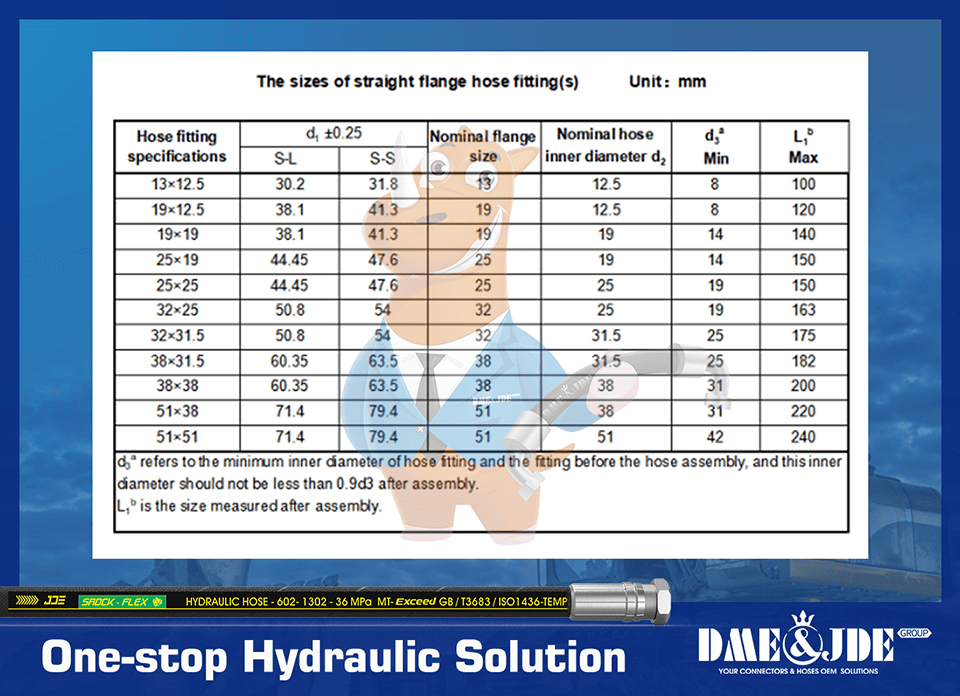
Taking straight flange hose fittings as an example, once the hose fitting specification is determined, different d1 dimensions can be used to distinguish between the light and heavy series of flanges. The applicable reference standard is GB/T 9065.3-2020.
-
JIC Association and SAE Association
- ♢ JIC (Joint Industry Conference): a U.S.-based industrial association.
The committee selected preferred specifications from UN threads for dedicated use, which were then defined as the JIC standard.
- ♢ SAE (Society of Automotive Engineers): a U.S.-affiliated automotive engineering society. This association also adopted selected specifications from relevant standards, which became known as the SAE standard.
With the above introduction, we believe you have gained a thorough understanding of DME hose fittings. Boasting a comprehensive, diversified product portfolio, DME&JDE Group delivers one-stop hydraulic fluid solutions for customers. These solutions eliminate the need to source from multiple suppliers, thereby reducing associated procurement and operational costs. Choosing the right DME&JDE hydraulic hoses and fittings will also help extend their service life significantly.



 English
 简体中文
简体中文